Why Do AI Detectors Sometimes Flag Human Writing as AI?
- globogenix
- May 4
- 4 min read

Artificial intelligence has rapidly transformed how content is created, reviewed, and evaluated. With this rise, AI detection tools have become increasingly popular, especially in education, publishing, and digital marketing. However, a common issue many users face is that these tools sometimes flag human-written content as AI-generated. This raises an important question: how reliable are AI detectors, and why do they occasionally get it wrong?
In this article, we’ll explore the reasons behind these false positives and what they mean for writers, students, and professionals.
What Are AI Detectors and How Do They Work?
AI detectors are tools designed to analyze text and determine whether it was written by a human or generated by artificial intelligence. They rely on algorithms that evaluate patterns such as sentence structure, predictability, word choice, and overall coherence.
Most detectors use concepts like “perplexity” (how unpredictable the text is) and “burstiness” (variation in sentence length and complexity). Human writing tends to have more variability, while AI-generated text often appears more structured and uniform. However, this distinction is not always clear-cut.
Why Do AI Detectors Sometimes Misclassify Human Writing?
AI detectors are not perfect because they rely on probability, not certainty. Human writing can sometimes resemble AI-generated patterns, especially when it is formal, structured, or optimized for clarity.
For example, academic writing, professional reports, or SEO-focused articles often follow predictable formats. This consistency can make human content appear similar to AI-generated text, leading to false positives.
Can Writing Style Influence AI Detection Results?
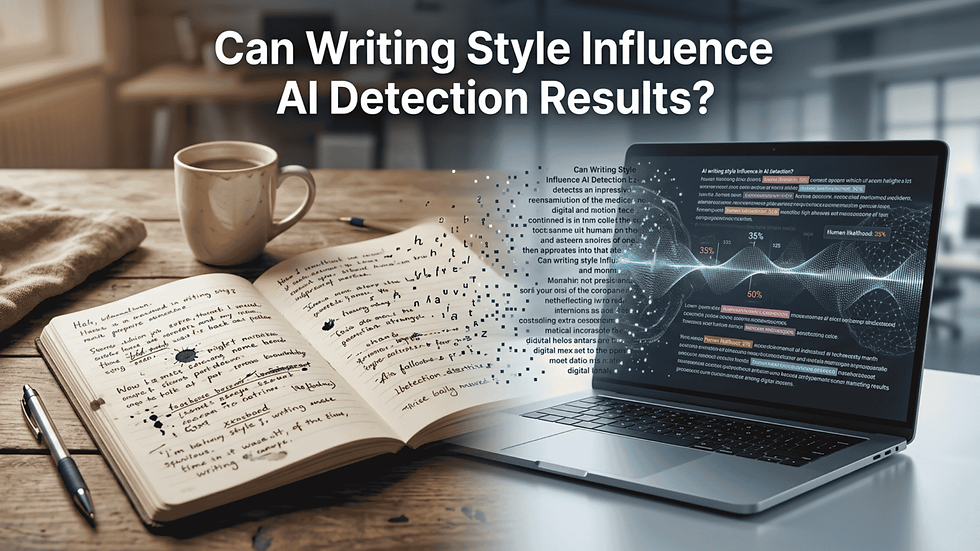
Yes, writing style plays a major role, even when discussing topics like Web3 wallets. Content that is highly structured, grammatically precise, neutral in tone, and lacking personal anecdotes is more likely to be flagged as AI-written. Ironically, strong writing practices such as clarity and coherence can increase the chances of misidentification.
On the other hand, content about Web3 wallets written in a more casual style, with varied sentence structures, emotional tone, and small imperfections, is more likely to be recognized as human.
Do AI Detectors Struggle with Certain Types of Content?
Absolutely. AI detectors often struggle with:
Academic writing: Research papers and essays tend to follow strict formats, making them appear algorithmic.
Technical content: Instructions, manuals, and documentation are usually straightforward and repetitive.
SEO-optimized articles: Content written for search engines often uses consistent phrasing and keyword placement.
Because these formats naturally resemble AI output, detectors may incorrectly flag them.
How Does Training Data Affect AI Detection Accuracy?
AI detectors are trained on datasets that include both human and AI-generated text. However, these datasets may not fully represent the diversity of human writing styles.
If a detector has been trained on limited or biased data, it may struggle to accurately classify newer or more complex writing patterns. Additionally, as AI writing tools evolve, detectors must constantly update to keep up, making accuracy a moving target.
Are AI Detection Tools 100% Reliable?
No, AI detection tools are not completely reliable. Most developers openly acknowledge that their tools provide estimates, not definitive judgments.
False positives (human text flagged as AI) and false negatives (AI text labeled as human) are both common. This is why many experts recommend using AI detectors as supportive tools rather than final decision-makers.
Can Editing and Proofreading Trigger AI Flags?

Surprisingly, yes. When human-written content is heavily edited for grammar, clarity, and consistency, it may start to resemble AI-generated text.
For instance, when discussing topics like AI and the future, using grammar tools or rewriting sentences to sound more polished can reduce natural variability. This makes the text appear more uniform, increasing the likelihood of being flagged by AI detectors.
What Role Does Predictability Play in Detection?
Predictability is a key factor in how AI detectors function. AI-generated content often follows predictable patterns because it is based on learned probabilities from training data.
However, humans can also write predictably, especially when following templates or formal guidelines. When writing becomes too uniform, detectors may interpret it as AI-generated, even if it is entirely human-written.
How Can Writers Reduce the Risk of False Positives?
While there is no guaranteed way to avoid AI detection errors, writers can take a few steps to reduce the risk:
Use varied sentence structures
Include personal insights or examples
Avoid overly repetitive phrasing
Write naturally instead of over-optimizing
Add a human tone where appropriate
These practices help make content feel more authentic and less algorithmic.
Should AI Detection Be Used as a Final Judgment?
Relying solely on AI detection tools for important decisions, such as academic integrity or hiring, can be problematic. Since these tools are not fully accurate, using them as the only measure can lead to unfair outcomes.
A more balanced approach involves combining AI detection results with human judgment, context, and additional verification methods.
You can also watch: Globussoft|Transforming Businesses with AI-Powered Solutions & Next-Gen Technology
Conclusion
AI detectors serve a useful purpose in today’s digital landscape, but they are far from perfect. The reason they sometimes flag human writing as AI lies in their reliance on patterns, predictability, and probability-based analysis.
Human writing is incredibly diverse, yet certain styles, especially formal, structured, or optimized content, can unintentionally resemble AI-generated text. As a result, false positives are inevitable.
Understanding these limitations is crucial for both writers and evaluators. Instead of treating AI detection as a definitive answer, it should be seen as one tool among many. Ultimately, human judgment remains essential in distinguishing authentic writing from machine-generated content.
FAQs
1. Can AI detectors accurately identify all AI-generated content?
No, AI detectors cannot guarantee 100% accuracy. They provide estimates based on patterns, which can lead to errors.
2. Why is my original content flagged as AI-written?
Your content may be structured, formal, or highly polished, which can resemble AI-generated patterns.
3. Do grammar tools increase AI detection risk?
In some cases, yes. Over-editing can make writing more uniform and predictable, triggering AI flags.
Comments